

Carolina Sampaio Portfolio

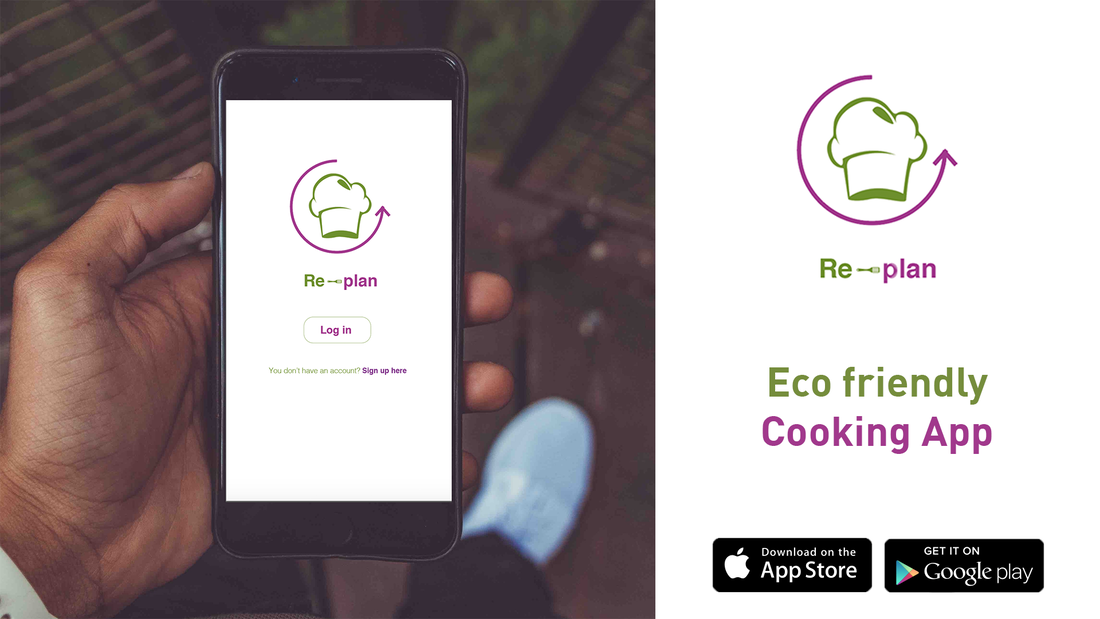
Re-plan - Cooking App

Company:Independent Designer


Role:UX & UI Designer

Duration:3 weeks

Design team size:Solo Designer

Skills:User Research, Interaction Design, Usability Test

Output & impact:30% food waste reduction in pilot testing

Summary/Context

Household food waste costs UK families an estimated £730 per year, yet most meal planning tools fail to address the root cause: users cannot easily incorporate leftovers into their weekly cooking. This project aimed to design and validate a meal planning application that places leftover management at its core, balancing sustainability with usability and budget constraints.

Research questions

  1. How do users currently manage leftovers, and what prevents effective reuse?
  2. How does budget interact with sustainability goals in meal planning decisions?
  3. How do dietary requirements and allergen concerns influence recipe discovery?
  4. What do users find most and least valuable in existing meal planning tools?
  5. How motivated are users by environmental impact when making food choices?

Challenges

ecruitment: Diverse participant profiles were difficult to source quickly. A screener survey was used to efficiently identify participants spanning varied motivations and household types before committing to interviews.

Scope: Balancing user research with algorithm feasibility risked scope creep. Research and design phases were kept deliberately separate so insights informed requirements rather than being retrofitted.

Budget–sustainability tension: Early findings showed users perceived these as conflicting. The discussion guide was adapted mid-study to probe this directly, yielding a key insight that shaped the app's budget-optimisation framing.

Approach

Screener Survey — 87 respondents Identified participant profiles and baseline behaviours. 68% reported regularly discarding perishables; only 22% planned meals around leftovers.

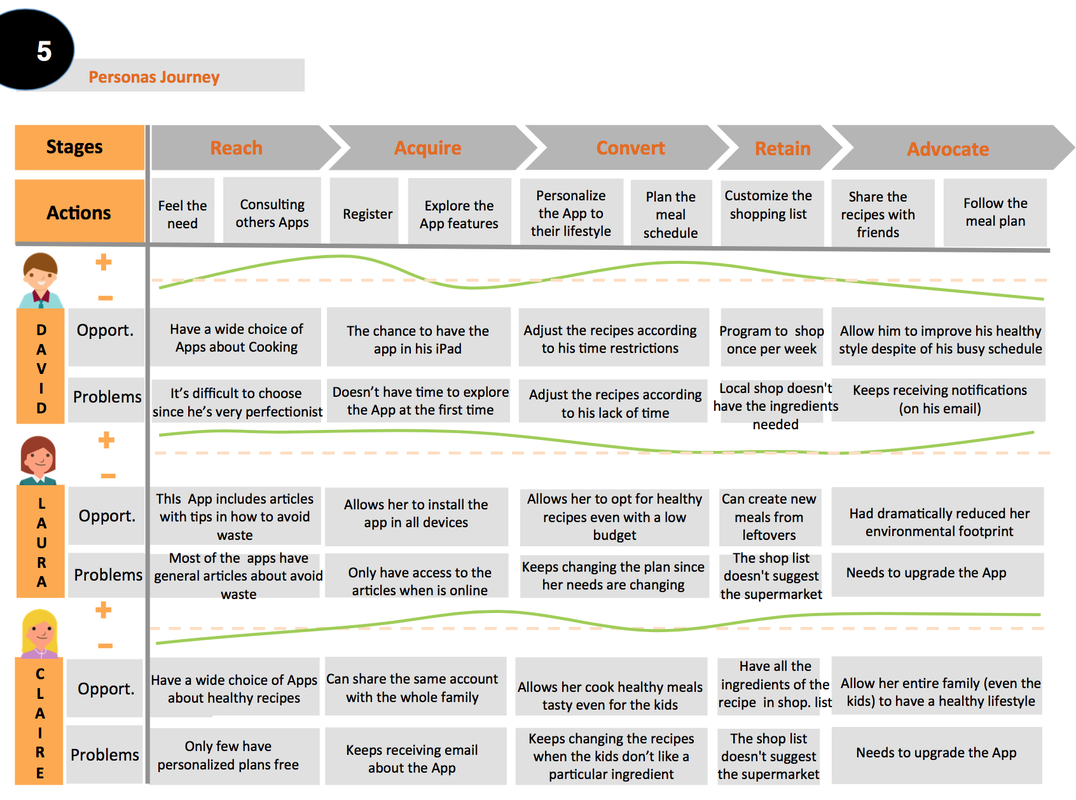
Semi-Structured Interviews — 12 participants Explored planning routines, food waste attitudes, and allergen management. Users wanted to reduce waste but lacked tools to make leftovers viable. Allergen filtering was the most-requested missing feature.

Diary Study — 6 participants, 2 weeks Revealed that waste peaked mid-week when weekend produce hadn't been used. Planning horizons rarely extended beyond two days.

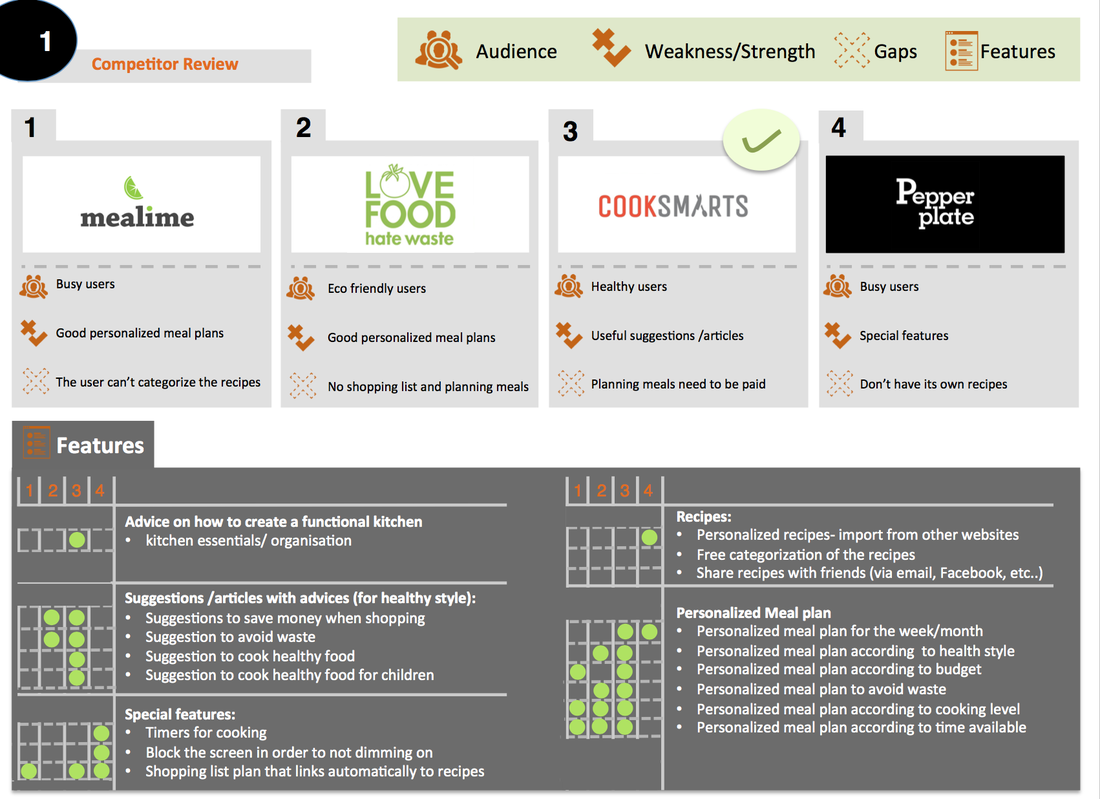
Competitive Analysis — 8 apps reviewed No existing tool combined leftover management with recipe generation. Budget tools and dietary filters existed in isolation, never together.

Usability Testing — 3 rounds, 18 participants total Abstract sustainability metrics were ignored; visual feedback was essential. Manual ingredient entry was a major barrier — barcode scanning was strongly preferred.
Critical insights

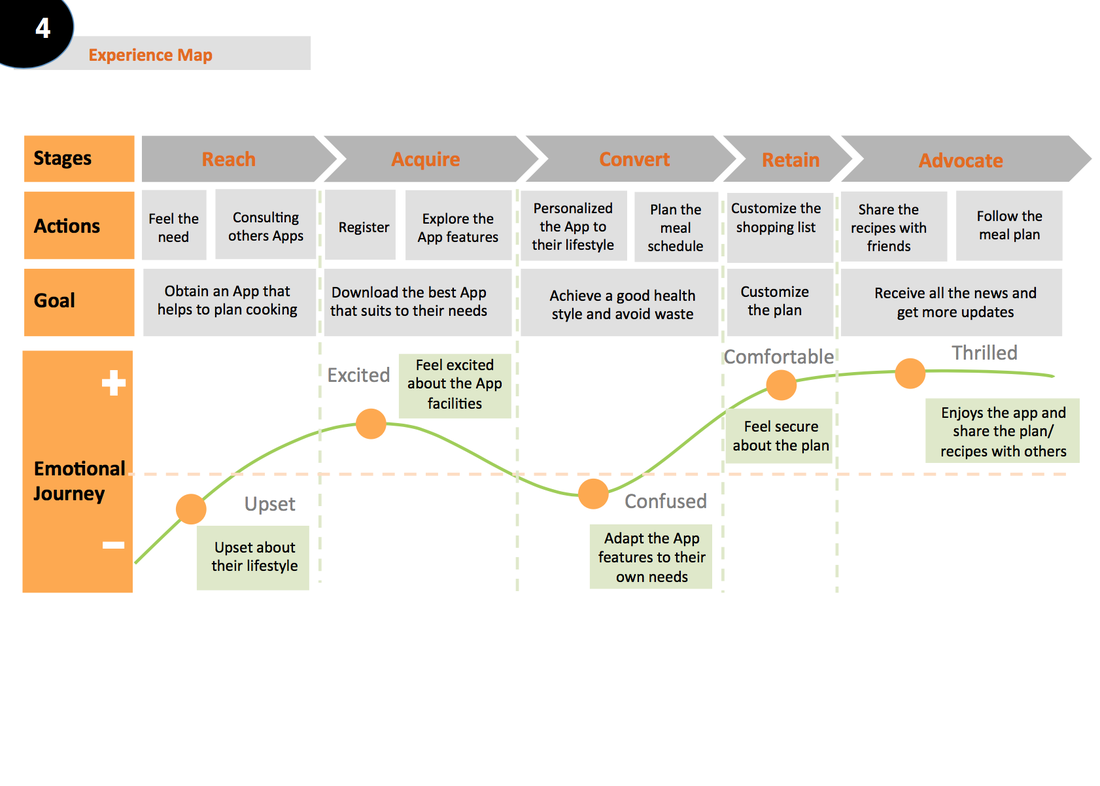
RQ1: Recipes need to be ingredient-led, not meal-led. Mid-week is the highest-risk period for waste.

RQ2: Once framed around saving money, sustainability and budget goals were seen as complementary, not competing.

RQ3: Allergen management was manual and anxiety-inducing. Filtering needed to be built into onboarding, not buried in settings.

RQ4: Speed and simplicity drove engagement. Complex features were ignored when core input felt burdensome.

RQ5: Environmental motivation existed but was secondary to convenience. Sustainability needed to be embedded, not foregrounded.
Deliverables

  • User behaviour analysis report and sustainability impact framework
  • Dietary requirement mapping and allergen logic documentation
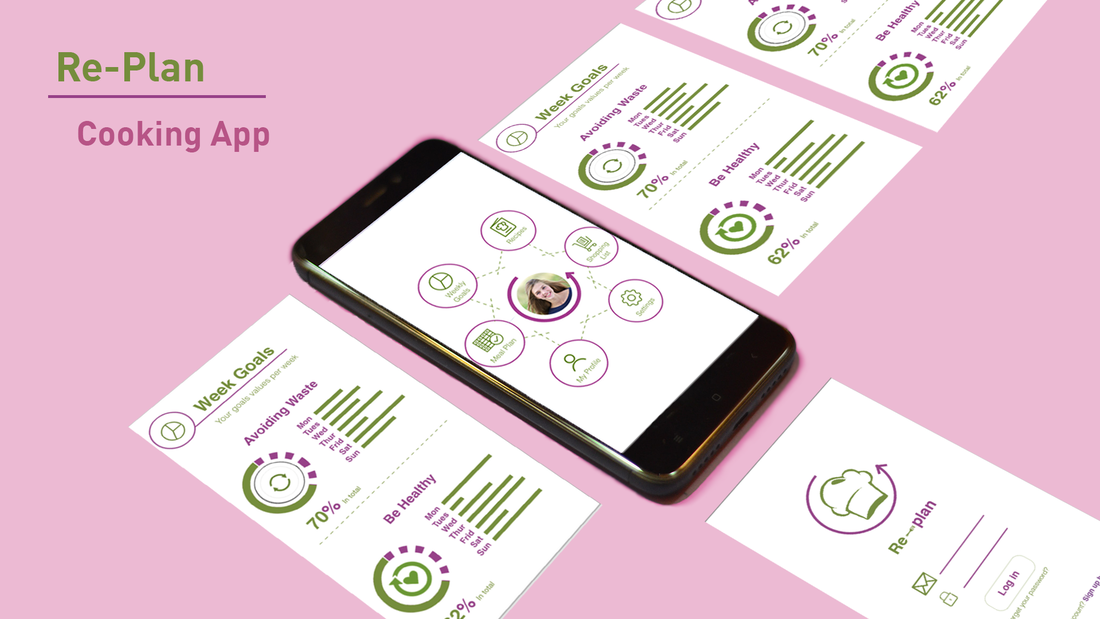
  • Full meal planning application with leftover-first recipe suggestions, dietary filters, weekly calendar, and budget optimisation
  • Ingredient tracking system and sustainability metrics dashboard
Impact

  • 30% reduction in self-reported food waste in pilot testing
  • Reduced allergen-related anxiety for users with dietary restrictions
  • Validated product concept with a clear, research-backed gap in the market

Carolina’s portfolio

Carolina Sampaio Portfolio

Re-plan - Cooking App

Company:Independent project

Role:UX & UI Designer

Duration:3 weeks

Design team size:Solo Designer

Skills:User Research, Interaction Design, Usability Test

Output & impact:30% food waste reduction in pilot testing

Summary/Context

Household food waste costs UK families an estimated £730 per year, yet most meal planning tools fail to address the root cause: users cannot easily incorporate leftovers into their weekly cooking. This project aimed to design and validate a meal planning application that places leftover management at its core, balancing sustainability with usability and budget constraints.

Research questions

  1. How do users currently manage leftovers, and what prevents effective reuse?
  2. How does budget interact with sustainability goals in meal planning decisions?
  3. How do dietary requirements and allergen concerns influence recipe discovery?
  4. What do users find most and least valuable in existing meal planning tools?
  5. How motivated are users by environmental impact when making food choices?

Research goals

  • Understand mental models around meal planning and grocery shopping
  • Identify friction points in existing food management workflows
  • Assess the relationship between sustainability motivation and practical behaviour
  • Map dietary restriction management as a usability challenge
  • Define design principles for a leftover-first recipe recommendation system

Challenges

ecruitment: Diverse participant profiles were difficult to source quickly. A screener survey was used to efficiently identify participants spanning varied motivations and household types before committing to interviews.

Scope: Balancing user research with algorithm feasibility risked scope creep. Research and design phases were kept deliberately separate so insights informed requirements rather than being retrofitted.

Budget–sustainability tension: Early findings showed users perceived these as conflicting. The discussion guide was adapted mid-study to probe this directly, yielding a key insight that shaped the app's budget-optimisation framing.

Approach

Screener Survey — 87 respondents Identified participant profiles and baseline behaviours. 68% reported regularly discarding perishables; only 22% planned meals around leftovers.

Semi-Structured Interviews — 12 participants Explored planning routines, food waste attitudes, and allergen management. Users wanted to reduce waste but lacked tools to make leftovers viable. Allergen filtering was the most-requested missing feature.

Diary Study — 6 participants, 2 weeks Revealed that waste peaked mid-week when weekend produce hadn't been used. Planning horizons rarely extended beyond two days.

Competitive Analysis — 8 apps reviewed No existing tool combined leftover management with recipe generation. Budget tools and dietary filters existed in isolation, never together.

Usability Testing — 3 rounds, 18 participants total Abstract sustainability metrics were ignored; visual feedback was essential. Manual ingredient entry was a major barrier — barcode scanning was strongly preferred.

Critical insights

RQ1: Recipes need to be ingredient-led, not meal-led. Mid-week is the highest-risk period for waste.

RQ2: Once framed around saving money, sustainability and budget goals were seen as complementary, not competing.

RQ3: Allergen management was manual and anxiety-inducing. Filtering needed to be built into onboarding, not buried in settings.

RQ4: Speed and simplicity drove engagement. Complex features were ignored when core input felt burdensome.

RQ5: Environmental motivation existed but was secondary to convenience. Sustainability needed to be embedded, not foregrounded.

Deliverables

  • User behaviour analysis report and sustainability impact framework
  • Dietary requirement mapping and allergen logic documentation
  • Full meal planning application with leftover-first recipe suggestions, dietary filters, weekly calendar, and budget optimisation
  • Ingredient tracking system and sustainability metrics dashboard

Impact

  • 30% reduction in self-reported food waste in pilot testing
  • Reduced allergen-related anxiety for users with dietary restrictions
  • Validated product concept with a clear, research-backed gap in the market

Carolina’s portfolio

Carolina Sampaio Portfolio

Re-plan - Cooking App

Company:Independent project


Role:UX & UI Designer

Duration:3 weeks

Design team size:Solo Designer

Skills:User Research, Interaction Design, Usability Testing

Output & impact:30% food waste reduction in pilot testing

Summary/Context

Household food waste costs UK families an estimated £730 per year, yet most meal planning tools fail to address the root cause: users cannot easily incorporate leftovers into their weekly cooking. This project aimed to design and validate a meal planning application that places leftover management at its core, balancing sustainability with usability and budget constraints.

Research questions

Research goals

Challenges

Approach

Deliverables & impact

Research questions

  1. How do users currently manage leftovers, and what prevents effective reuse?
  2. How does budget interact with sustainability goals in meal planning decisions?
  3. How do dietary requirements and allergen concerns influence recipe discovery?
  4. What do users find most and least valuable in existing meal planning tools?
  5. How motivated are users by environmental impact when making food choices?

Research goals

  • Understand mental models around meal planning and grocery shopping
  • Identify friction points in existing food management workflows
  • Assess the relationship between sustainability motivation and practical behaviour
  • Map dietary restriction management as a usability challenge
  • Define design principles for a leftover-first recipe recommendation system

Challenges

ecruitment: Diverse participant profiles were difficult to source quickly. A screener survey was used to efficiently identify participants spanning varied motivations and household types before committing to interviews.

Scope: Balancing user research with algorithm feasibility risked scope creep. Research and design phases were kept deliberately separate so insights informed requirements rather than being retrofitted.

Budget–sustainability tension: Early findings showed users perceived these as conflicting. The discussion guide was adapted mid-study to probe this directly, yielding a key insight that shaped the app's budget-optimisation framing.

Approach

Screener Survey — 87 respondents Identified participant profiles and baseline behaviours. 68% reported regularly discarding perishables; only 22% planned meals around leftovers.

Semi-Structured Interviews — 12 participants Explored planning routines, food waste attitudes, and allergen management. Users wanted to reduce waste but lacked tools to make leftovers viable. Allergen filtering was the most-requested missing feature.

Diary Study — 6 participants, 2 weeks Revealed that waste peaked mid-week when weekend produce hadn't been used. Planning horizons rarely extended beyond two days.

Competitive Analysis — 8 apps reviewed No existing tool combined leftover management with recipe generation. Budget tools and dietary filters existed in isolation, never together.

Usability Testing — 3 rounds, 18 participants total Abstract sustainability metrics were ignored; visual feedback was essential. Manual ingredient entry was a major barrier — barcode scanning was strongly preferred.

Critical Insights

RQ1: Recipes need to be ingredient-led, not meal-led. Mid-week is the highest-risk period for waste.

RQ2: Once framed around saving money, sustainability and budget goals were seen as complementary, not competing.

RQ3: Allergen management was manual and anxiety-inducing. Filtering needed to be built into onboarding, not buried in settings.

RQ4: Speed and simplicity drove engagement. Complex features were ignored when core input felt burdensome.

RQ5: Environmental motivation existed but was secondary to convenience. Sustainability needed to be embedded, not foregrounded.

Deliverables

  • User behaviour analysis report and sustainability impact framework
  • Dietary requirement mapping and allergen logic documentation
  • Full meal planning application with leftover-first recipe suggestions, dietary filters, weekly calendar, and budget optimisation
  • Ingredient tracking system and sustainability metrics dashboard

Impact

  • 30% reduction in self-reported food waste in pilot testing
  • Reduced allergen-related anxiety for users with dietary restrictions
  • Validated product concept with a clear, research-backed gap in the market