Carolina Sampaio Portfolio

Solar AvoriRenewable App

Company:RES (RES is the world's largest independent renewable energy company)

Role:Design Lead

Project duration:6 months

Design team size:2 designers

Skills:User research, prototyping and user testing

Output & impact:Fully working product

Summary/Context

At RES, the Monitoring team was trapped in a complex ecosystem of fragmented software tools, each with critical functionality gaps. This technological labyrinth not only hindered productivity but also incurred substantial operational costs. The design team recognised an opportunity to transform this challenge into a strategic solution.

Research questions

  • What information enables portfolio managers to assess asset performance strategically?
  • What communication patterns and terminology do managers use with stakeholders?
  • How should strategic insights connect to technical data in AEMo?

Research goals

  • Define portfolio manager personas and mental models
  • Map information needs across decision-making scenarios
  • Identify current workarounds and inefficiencies
  • Understand integration requirements between management and technical systems

Challenges

  • Constraint: No access to external customers during research phase.
  • Response: Recruited internal RES portfolio managers with equivalent roles. Triangulated findings through competitive analysis and validated assumptions during usability testing to mitigate insider bias.
  • Additional Complexity: Bridging strategic and technical mental models required careful information architecture serving managers whilst maintaining connection to engineering data.

Approach

User interviews

(6 internal portfolio managers) Semi-structured interviews using task scenarios, mental model mapping, and critical incident technique. Thematic analysis with affinity mapping.

Benchmarking

Heuristic evaluation of 4 competitor platforms focused on information hierarchy, customisation, and alert management.

Standards Identified:

  • Status-driven dashboards, customisable KPIs, comparative performance views (asset vs portfolio average vs targets).ternal portfolio managers)
  • Semi-structured interviews using task scenarios, mental model mapping, and critical incident technique. Thematic analysis with affinity mapping.

Critical findings

  • 100% expected customisable dashboards matching portfolio composition
  • Visual scanning followed F-pattern—alerts required top-left priority
  • 80% compared assets before individual deep-dive (unanticipated workflow)
  • Terminology testing revealed preference for "asset health" over "performance status"

Deliverables

  • Complete wireframe system covering 12 core user journeys
  • Validated interaction patterns with documented usability test results
  • Responsive design specifications including state changes and error handling
  • Research repository with persona documentation and design rationale
  • Integration requirements document for AEMo connectivity

Impact

  • Market Position: Completed RES's end-to-end offering, addressing competitive disadvantage
  • Operational Efficiency: Reduced portfolio assessment from hours (manual aggregation) to minutes (automated dashboards)
  • Customer Value: Multi-level platform serves both technical and executive stakeholders, increasing retention potential
  • Validation: Post-launch feedback confirmed research approach: "Finally a tool that speaks our language"

Carolina’s portfolio

Carolina Sampaio Portfolio

Solar AvoriRenewable App

Company:RES (RES is the world's largest independent renewable energy company)

Role:Design Lead

Project duration:6 months

Design team size:2 designers

Skills:User research, prototyping and user testing

Output & impact:Fully working product

Summary/Context

RES had Helio, a technical platform for engineers, but no solution for portfolio managers, which created a significant service gap in our offerings. Competitors already offered integrated solutions spanning technical operations to executive strategy. This project developed a strategic management platform translating asset performance data into executive-level intelligence, completing RES's end-to-end offering.

Research questions

  • What information enables portfolio managers to assess asset performance strategically?
  • What communication patterns and terminology do managers use with stakeholders?
  • How should strategic insights connect to technical data in AEMo?

Research goals

  • Define portfolio manager personas and mental models
  • Map information needs across decision-making scenarios
  • Identify current workarounds and inefficiencies
  • Understand integration requirements between management and technical systems

Challenges

  • Constraint: No access to external customers during research phase.
  • Response: Recruited internal RES portfolio managers with equivalent roles. Triangulated findings through competitive analysis and validated assumptions during usability testing to mitigate insider bias.
  • Additional Complexity: Bridging strategic and technical mental models required careful information architecture serving managers whilst maintaining connection to engineering data.

Approach

User Interviews

(6 internal portfolio managers) Semi-structured interviews using task scenarios, mental model mapping, and critical incident technique. Thematic analysis with affinity mapping.

Benchmarking

Heuristic evaluation of 4 competitor platforms focused on information hierarchy, customisation, and alert management.

Standards Identified:

  • Status-driven dashboards, customisable KPIs, comparative performance views (asset vs portfolio average vs targets).ternal portfolio managers)
  • Semi-structured interviews using task scenarios, mental model mapping, and critical incident technique. Thematic analysis with affinity mapping.

Critical findings

  • 100% expected customisable dashboards matching portfolio composition
  • Visual scanning followed F-pattern—alerts required top-left priority
  • 80% compared assets before individual deep-dive (unanticipated workflow)
  • Terminology testing revealed preference for "asset health" over "performance status"

Deliverables

  • Complete wireframe system covering 12 core user journeys
  • Validated interaction patterns with documented usability test results
  • Responsive design specifications including state changes and error handling
  • Research repository with persona documentation and design rationale
  • Integration requirements document for AEMo connectivity

Impact

  • Market Position: Completed RES's end-to-end offering, addressing competitive disadvantage
  • Operational Efficiency: Reduced portfolio assessment from hours (manual aggregation) to minutes (automated dashboards)
  • Customer Value: Multi-level platform serves both technical and executive stakeholders, increasing retention potential
  • Validation: Post-launch feedback confirmed research approach: "Finally a tool that speaks our language"

Carolina’s portfolio

Carolina Sampaio Portfolio

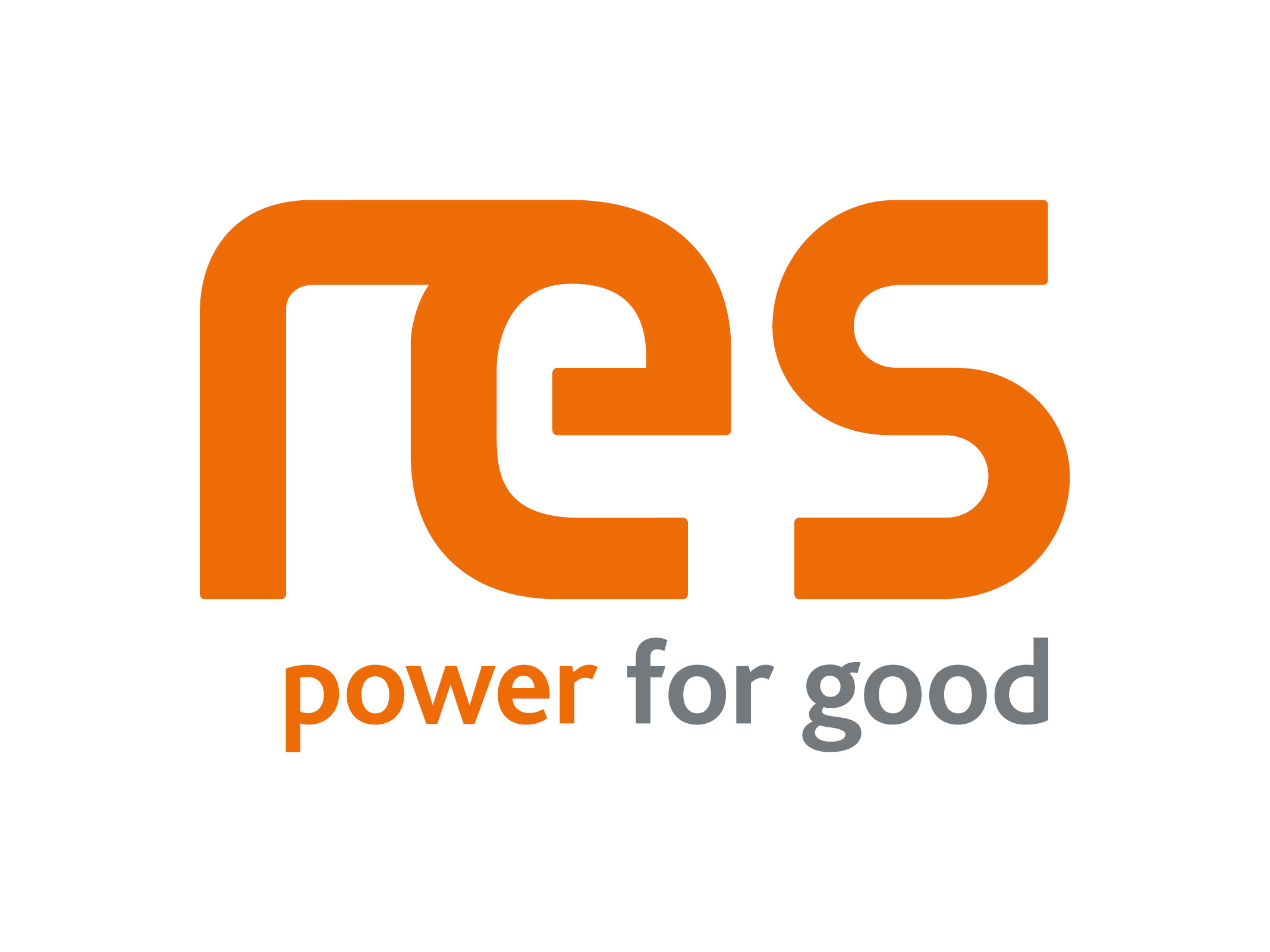
Solar Avori - Renewable App
Company:RES (RES is the world's largest independent renewable energy company)

Role:Design Lead

Project duration:6 months

Design team size:

2 designers

Skills:

User research, prototyping and user testing

Output & impact: Fully working product

Summary/context

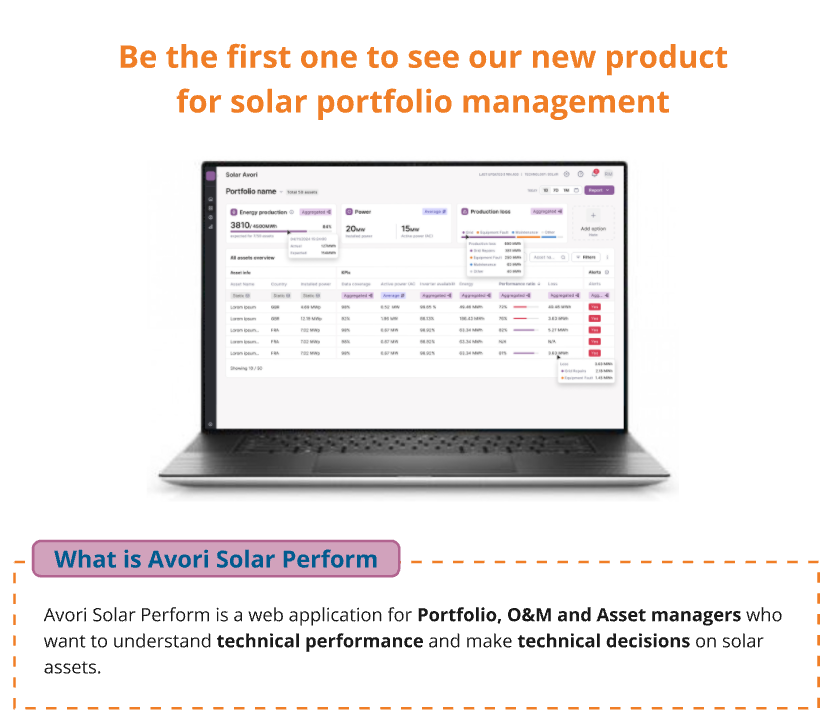
RES had Helio, a technical platform for engineers, but no solution for portfolio managers, which created a significant service gap in our offerings. Competitors already offered integrated solutions spanning technical operations to executive strategy. This project developed a strategic management platform translating asset performance data into executive-level intelligence, completing RES's end-to-end offering.

Project phases

Research questions

Research goals

Challenges

Approach

Deliverables & impact

Research questions

  • What information enables portfolio managers to assess asset performance strategically?
  • What communication patterns and terminology do managers use with stakeholders?
  • How should strategic insights connect to technical data in AEMo?

Research goals

  • Define portfolio manager personas and mental models
  • Map information needs across decision-making scenarios
  • Identify current workarounds and inefficiencies
  • Understand integration requirements between management and technical systems

Challenges

  • Constraint: No access to external customers during research phase.
  • Response: Recruited internal RES portfolio managers with equivalent roles. Triangulated findings through competitive analysis and validated assumptions during usability testing to mitigate insider bias.
  • Additional Complexity: Bridging strategic and technical mental models required careful information architecture serving managers whilst maintaining connection to engineering data.

Approach

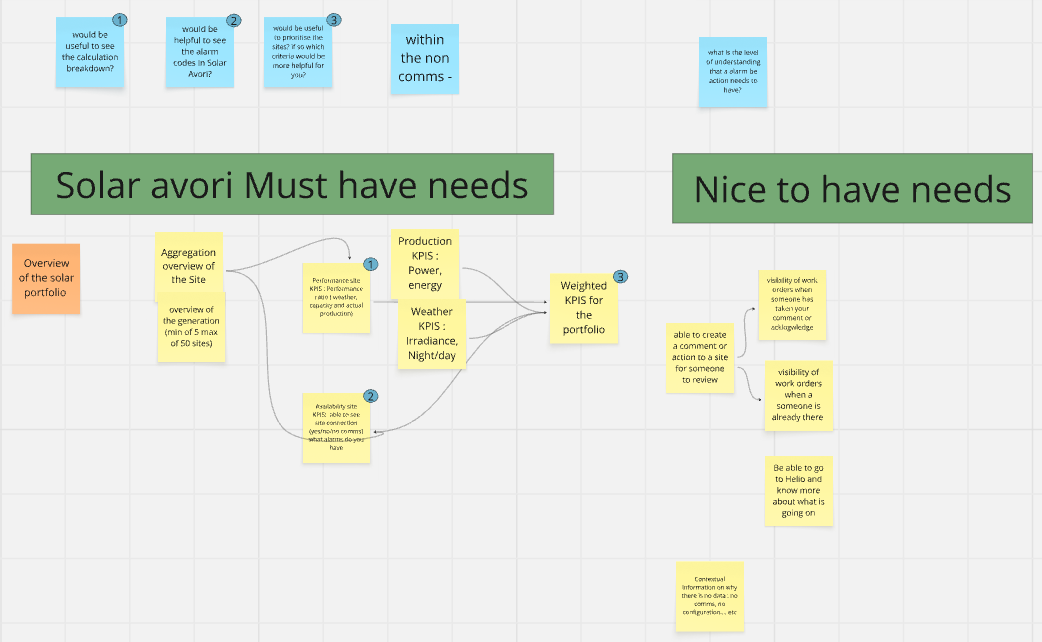
User Interviews

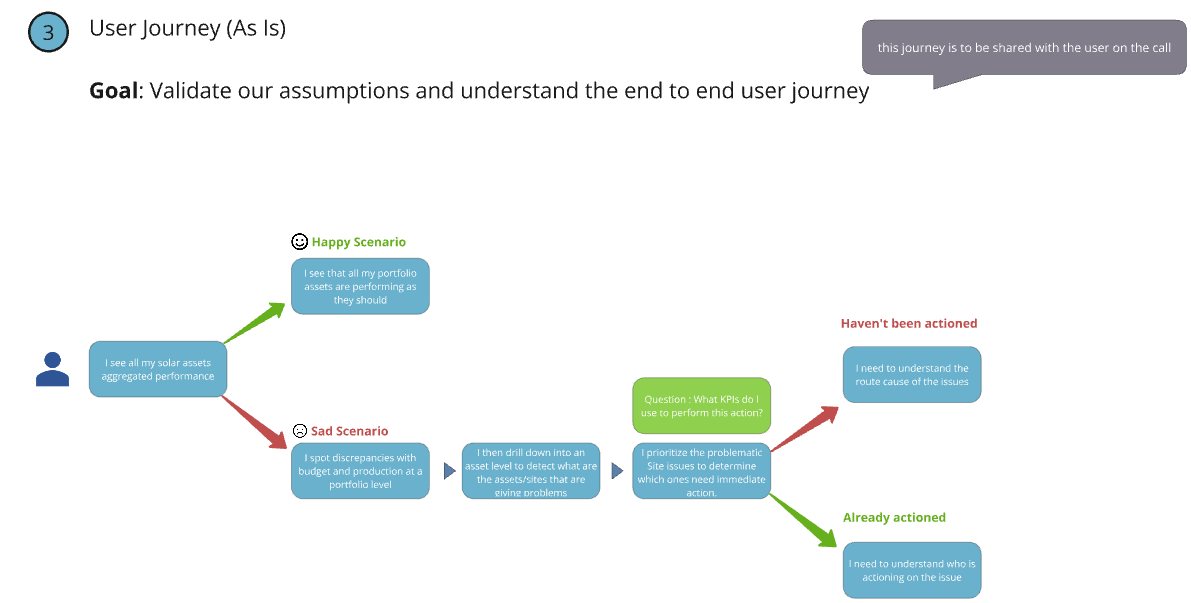
(6 internal portfolio managers) Semi-structured interviews using task scenarios, mental model mapping, and critical incident technique. Thematic analysis with affinity mapping.
Benchmarking

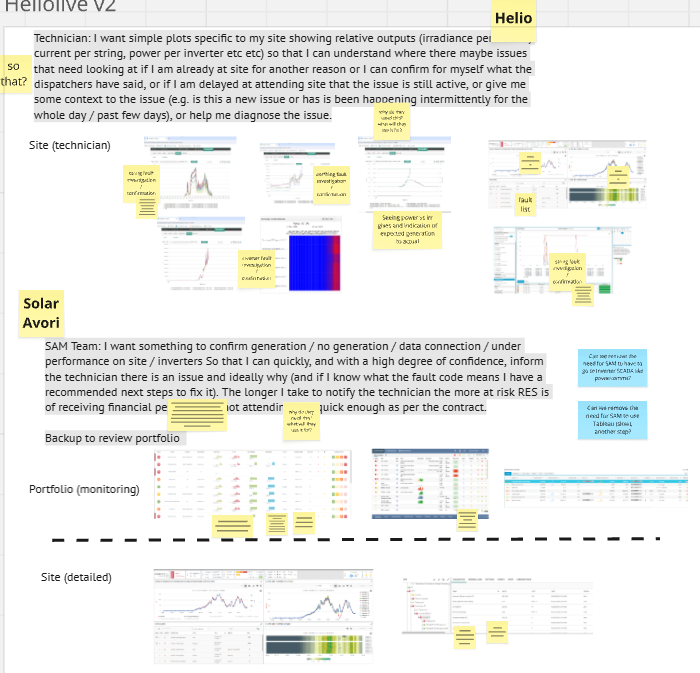
Heuristic evaluation of 4 competitor platforms focused on information hierarchy, customisation, and alert management.

Standards Identified:

  • Status-driven dashboards, customisable KPIs, comparative performance views (asset vs portfolio average vs targets).ternal portfolio managers)
  • Semi-structured interviews using task scenarios, mental model mapping, and critical incident technique. Thematic analysis with affinity mapping.
Critical findings

  • 100% expected customisable dashboards matching portfolio composition
  • Visual scanning followed F-pattern—alerts required top-left priority
  • 80% compared assets before individual deep-dive (unanticipated workflow)
  • Terminology testing revealed preference for "asset health" over "performance status"

Deliverables

  • Complete wireframe system covering 12 core user journeys
  • Validated interaction patterns with documented usability test results
  • Responsive design specifications including state changes and error handling
  • Research repository with persona documentation and design rationale
  • Integration requirements document for AEMo connectivity

Impact

  • Market Position: Completed RES's end-to-end offering, addressing competitive disadvantage
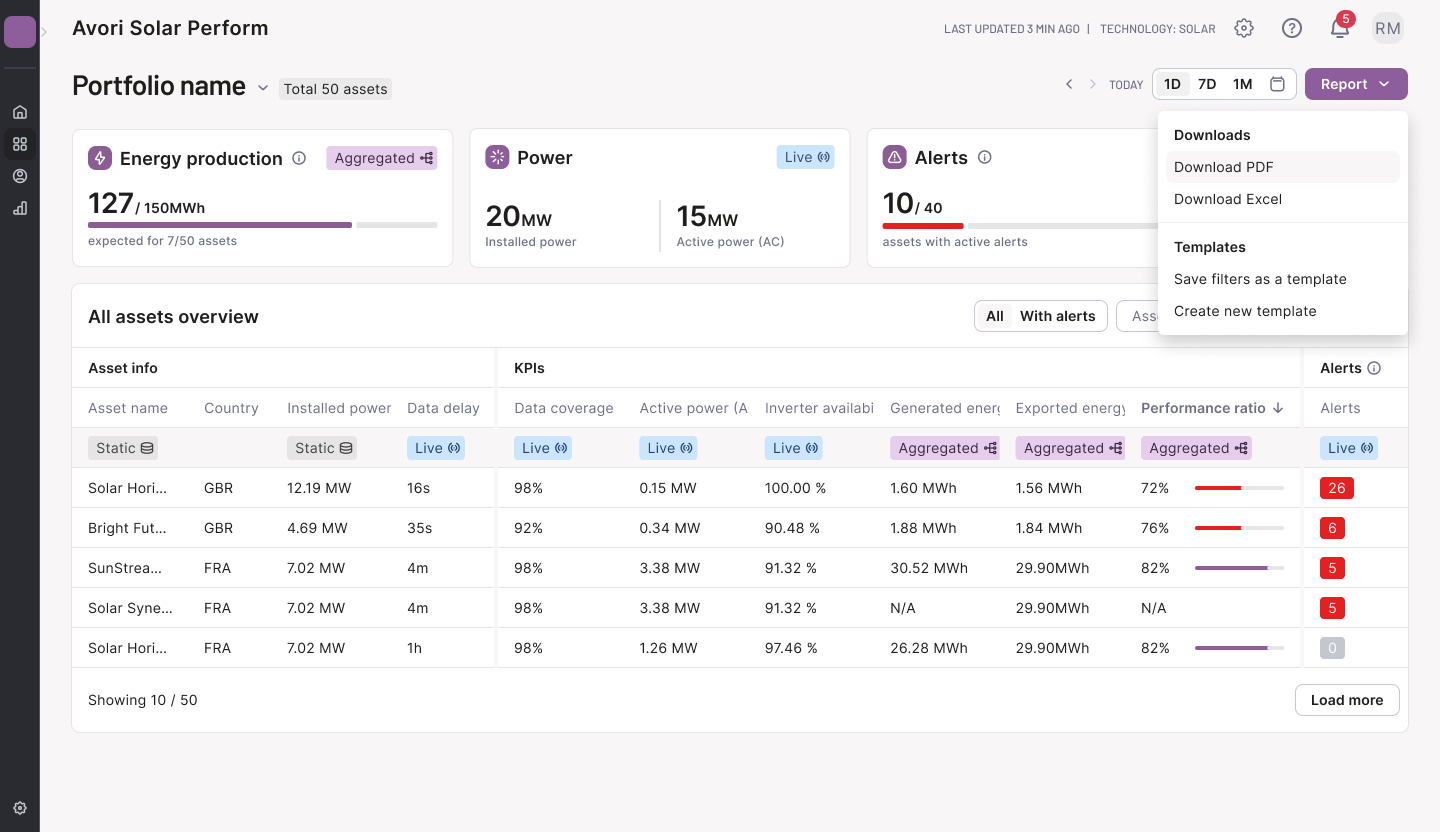
  • Operational Efficiency: Reduced portfolio assessment from hours (manual aggregation) to minutes (automated dashboards)
  • Customer Value: Multi-level platform serves both technical and executive stakeholders, increasing retention potential
  • Validation: Post-launch feedback confirmed research approach: "Finally a tool that speaks our language"
Carolina’s portfolio